


If you work in an organization that depends on many systems, data sources, and operational workflows, your biggest AI challenge is no longer choosing a model.
It is getting all of these systems to work together in the real world, without breaking how your product or business operates.
This shift is called AI orchestration. At a practical level, orchestration determines what should happen, when it should happen, what data should be used, how results move through the system, and how the system recovers when something goes wrong.
As teams move AI beyond demos and into production, they are learning that failures rarely come from the model itself. They happen when systems act out of order, lose important information, or fail to respond when real-world conditions change.
Understanding orchestration will determine whether AI becomes a durable advantage or stalls as a collection of disconnected experiments.
These are the seven architectural shifts organizations need to understand as AI becomes system-level.
-
AI moves from chat interfaces to embedded intelligence

Today, most people experience AI through chat interfaces. That pattern will not shape the next phase of AI adoption.
Real operations depend on events, not user questions. Systems need to respond in real time when a shipment arrives late, a sensor reading changes, or a patient moves from one stage of care to another.
AI will move inside these workflows. It will watch for meaningful changes, understand context, and trigger the next correct step. This requires orchestration, because real operations involve timing, dependencies, and handoffs that a single model cannot manage on its own.
AI stops acting like a tool you query and becomes a layer of intelligence that reacts inside the system itself.
-
Multi-agent systems replace the single-model pattern
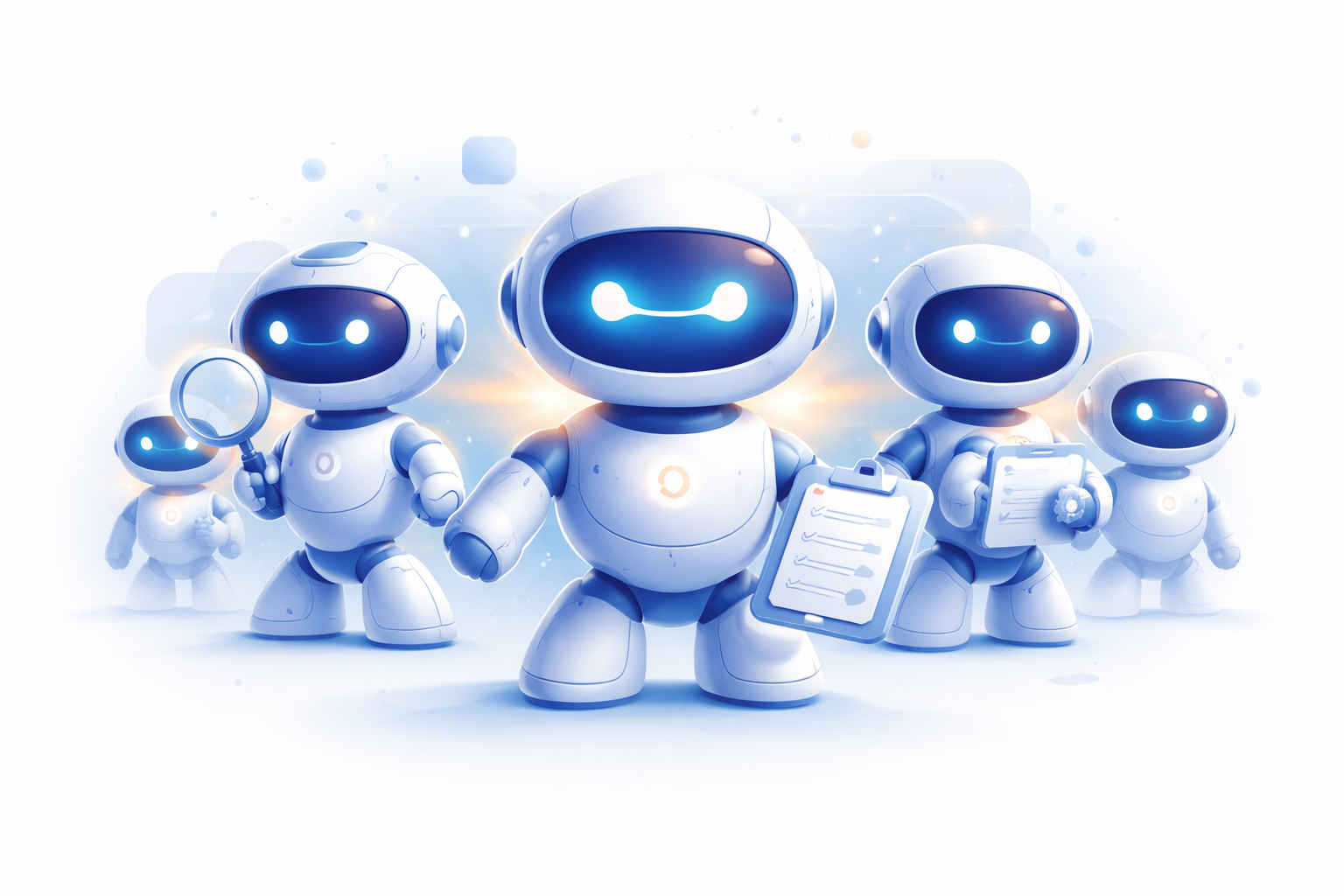
The future of AI is not one large model handling everything.
Instead, it is a set of specialized agents, each responsible for part of a task. One agent plans, another retrieves information, another checks rules, another manages safety, and another interacts with people or external systems.
These agents may rely on different models depending on what they need to do. Some tasks require more powerful and expensive models. Others work better with faster and cheaper ones.
The hard part is not building the agents. It is coordinating them so they behave as a single system.
Without orchestration, agents can conflict, repeat work, or act on incomplete information. With orchestration, they share context, respect boundaries, and recover cleanly when something goes wrong.
Over the next three years, multi-agent systems will be the standard pattern for enterprise AI, and orchestration will be what makes them practical at scale.
-
AI becomes hybrid across cloud and edge

AI will not live only in the cloud.
Some decisions need to happen close to where data is created. Cameras, vehicles, clinical devices, and industrial sensors often need to react immediately, without waiting for a round trip to a remote system.
Edge systems handle local context and fast responses. Cloud systems coordinate broader workflows, heavier processing, and longer-running tasks.
Running AI at the edge does not automatically mean stronger models or better security. In many cases, cloud-based models remain faster and more capable. The value of the edge comes from timing and locality, not raw compute.
Orchestration keeps cloud and edge working together. It ensures decisions stay aligned, context remains consistent, and systems behave predictably as conditions change.
-
AI starts controlling real operations, not just information

The most significant shift is operational.
AI is moving from generating content to managing how work actually happens.
Consider a hospital discharge process. A system may extract information from clinical notes, confirm required tasks are complete, verify insurance or billing steps, coordinate room turnover, and notify care teams.
Some steps can happen in parallel. Others must wait until specific conditions are met. All of them depend on real-time context.
If part of the system moves too early or misses an update, the workflow breaks. Orchestration ensures actions happen in the right order, with the right data, and at the right time.
This level of control becomes essential once AI is trusted to interact with real-world operations.
-
Fast model evolution forces a new architectural mindset

Models are improving quickly. New versions are released often. Costs drop. Capabilities expand.
Document processing shows the tradeoff clearly. Early systems may take minutes to process a single document and cost enough that usage has to be constrained. Teams limit volume, batch jobs overnight, or avoid using the system altogether.
Just months later, newer models can run the same pipeline in seconds for a fraction of the cost. The real win is not just speed. It is the freedom to scale usage without worrying about time or spend.
That improvement only matters if teams can switch models easily. In tightly coupled systems, swaps break workflows because prompts change, outputs look different, and tools behave differently. In orchestrated systems, switching models becomes routine, allowing teams to immediately benefit from lower costs and better performance.
Over time, systems designed to absorb frequent model change are the ones that stay stable, flexible, and cost-effective.
-
Reliability becomes a first-class requirement for AI systems

As AI systems scale, reliability stops being an optimization and becomes a requirement.
In production environments, failures are not rare events. One-in-a-million bugs quickly become daily problems at scale.
When something fails, AI systems cannot lose their place. They cannot forget what they were doing or restart from scratch.
State and memory must persist across crashes, retries, and infrastructure failures. The system must know what has already happened and what still needs to happen next.
If AI loses context during failure, it cannot be trusted to run real operations. Reliability depends on designing for recovery, continuity, and memory from the very beginning.
-
Orchestration becomes the backbone of intelligent systems
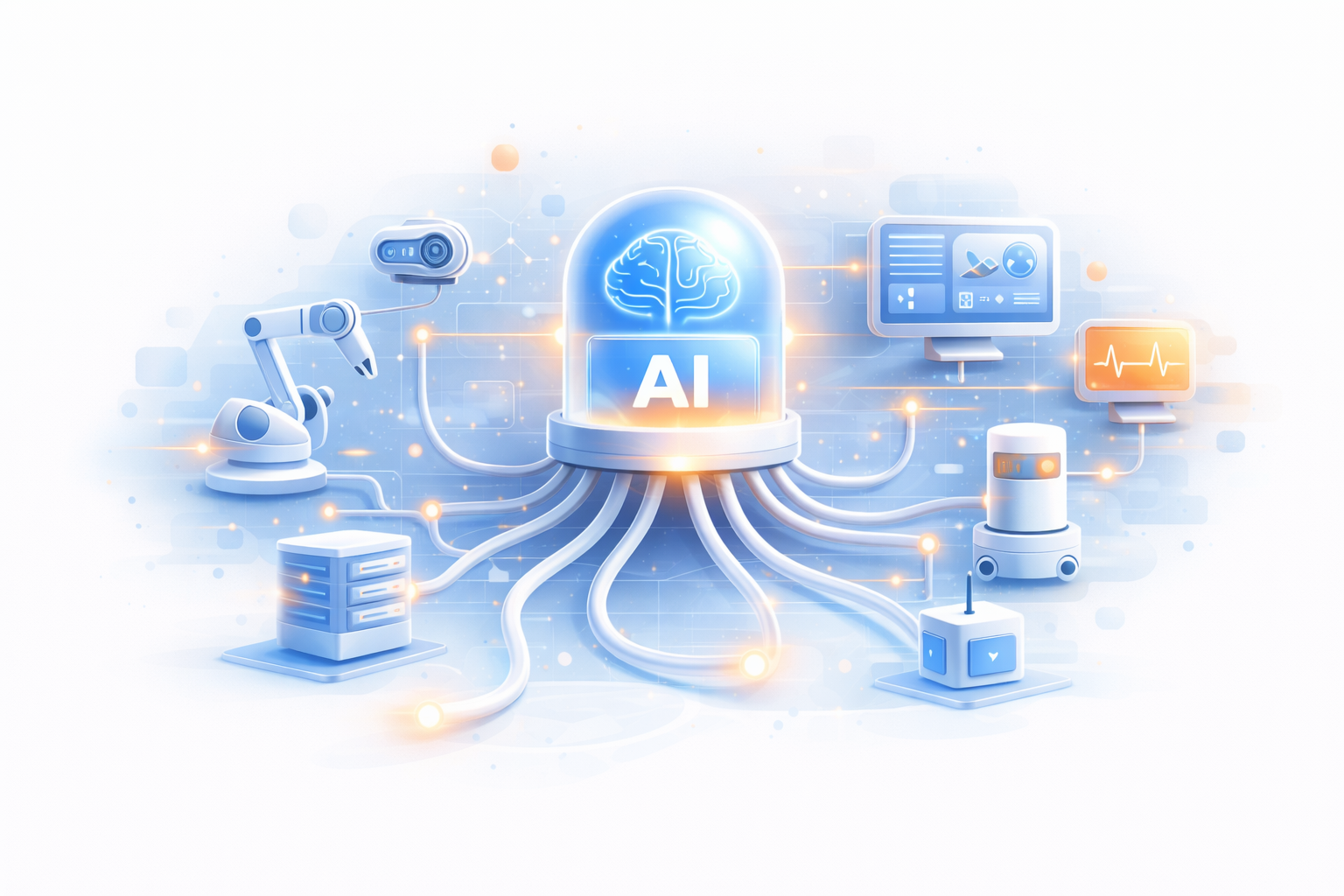
Many organizations still build AI proofs of concept that work in isolation, but collapse under real operational pressure. These demos often fail to handle timing issues, data drift, system integration, or failure paths once they leave controlled environments.
The smartest leaders will take a different approach. They will build AI the same way they build other mission-critical systems. They will:
- assume models will change
- design for reliability and safety from the start
- use event-driven patterns
- support hybrid cloud and edge environments
- treat AI as part of their core infrastructure
The goal is not to build something impressive once. It is to build something that keeps working and stays at the leading edge as your organization evolves.
Organizations that understand this shift early will define the next decade of innovation.
Conclusion: The Future Depends on Orchestration
AI will not transform organizations through larger models or flashier demos. It will transform them through systems that can coordinate many intelligent parts, handle constant change, and operate in real time across cloud and edge.
Orchestration is what makes this possible. It is the layer that turns intelligence into action, manages complexity as models evolve, and keeps operations stable even as the technology underneath shifts.
Over the next few years, the organizations that lead will be the ones that treat AI as a system-level capability, not a standalone tool. They will build architectures that can adapt, scale, and respond to the real world. They will think in terms of workflows, events, and coordination, not isolated prompts.
The next decade of AI belongs to those who can orchestrate it.