


For decades, the story of software has been a story of control. We built systems like elaborate clockwork – intricate, precise, and utterly rigid. If you wanted the software to do something, you had to write a rule for it. If the user veered off the path, the software simply stopped working.
We call this Deterministic Software. It is the bedrock of our digital world, and it has served us well. But as we attempt to solve increasingly messy, real-world problems – like real-time supply chain adjustments or personalized patient care – the limits of this “If-Then” architecture are becoming a bottleneck.
We are entering the era of Adaptive Software, powered by generative and agentic AI. It represents a fundamental shift: from software that strictly follows instructions to software that understands intent.
The Deterministic Ceiling: The “If-Then” Problem
 At its core, deterministic software relies on explicitly defined paths. Imagine a flowchart that covers every possible interaction.
This approach is excellent for tasks where reliability is paramount, such as banking transactions or flight controls. You want these systems to be predictable. However, this creates a “brittleness” problem. If a developer hasn’t explicitly coded for a specific scenario, the system fails. We have spent billions on “edge case” management, trying to anticipate every possible scenario, only to be surprised when reality turns out to be more chaotic than our code.
The Adaptive Leap: Reasoning Over Rules
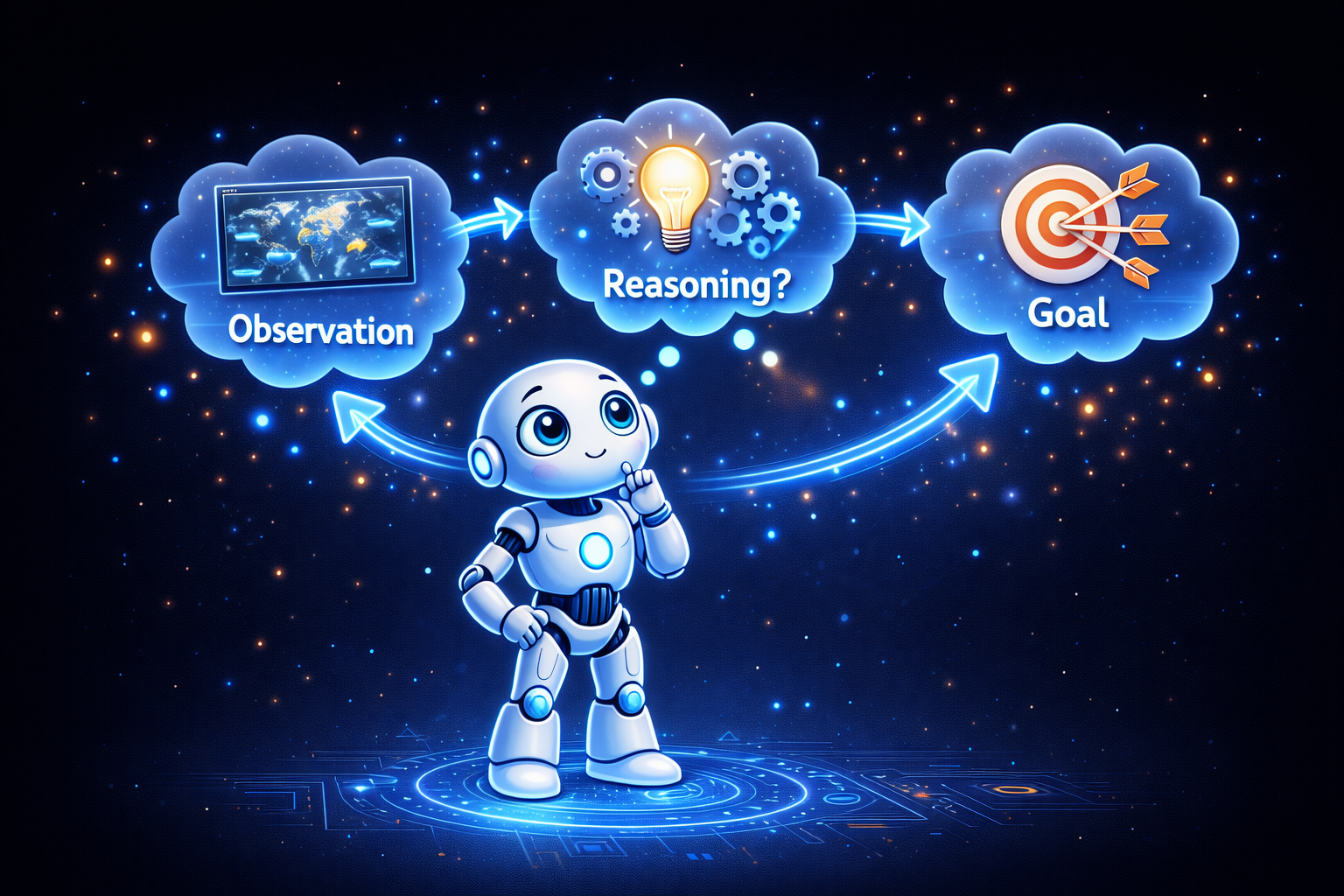 Adaptive software flips this model. Instead of hard-coding every branch in the tree, we provide the system with a goal, a set of constraints, and the ability to reason.
Rather than following a map, these agents use generative and agentic AI to “see” the current state of the world, compare it against the desired outcome, and determine the next best step in real-time. This allows systems to handle situations that were previously unattainable – scenarios that are too nuanced or unpredictable for traditional programming.
The Reliability Gap: Why Guardrails Matter
 The shift to adaptive systems introduces a new challenge: trust. Because these systems are dynamic, they can be unpredictable. You cannot simply “debug” a neural network the way you debug a C++ script.
To bridge this gap, we need more than just a powerful LLM; we need an AI orchestration platform – like Vantiq – to provide the necessary infrastructure. Orchestration platforms are critical because they allow you to wrap these adaptive AI agents in a robust harness:
- Compliance Layers: Hard-coded logic that ensures the AI never violates regulatory or safety requirements, regardless of what it “thinks” is the best path.
- Validation Loops: Automated testing that monitors the AI’s output in real-time, intervening if the logic deviates from acceptable parameters.
- State Management: Ensuring the AI has a “memory” of the business context, preventing it from losing sight of the broader organizational goals.
- Failure Modes: Self awareness of the system to diagnose when things are not going to plan and human involvement is needed.
The Hybrid Future: The “Golden Mean”
The most important realization for leaders today is that this is not an “either-or” choice. The future of enterprise software is not 100% agentic, nor is it 100% deterministic.
The most successful systems will be hybrid architectures.
You should build the “skeleton” of your software using deterministic logic – this is where your core business rules, compliance, and data integrity live. It provides the firm ground upon which the system stands. Then, you mix in adaptive capabilities sparingly – the “connective tissue” that handles the complex, messy, and unpredictable. And, the key word here is sparingly; a light touch with the use of AI is usually the more effective approach.
By using an orchestration platform to blend these two styles, you maintain the rigor of traditional software while gaining the agility of modern AI. You aren’t replacing your logic; you are giving it the ability to navigate the world as it actually is, not just as we wish it to be.